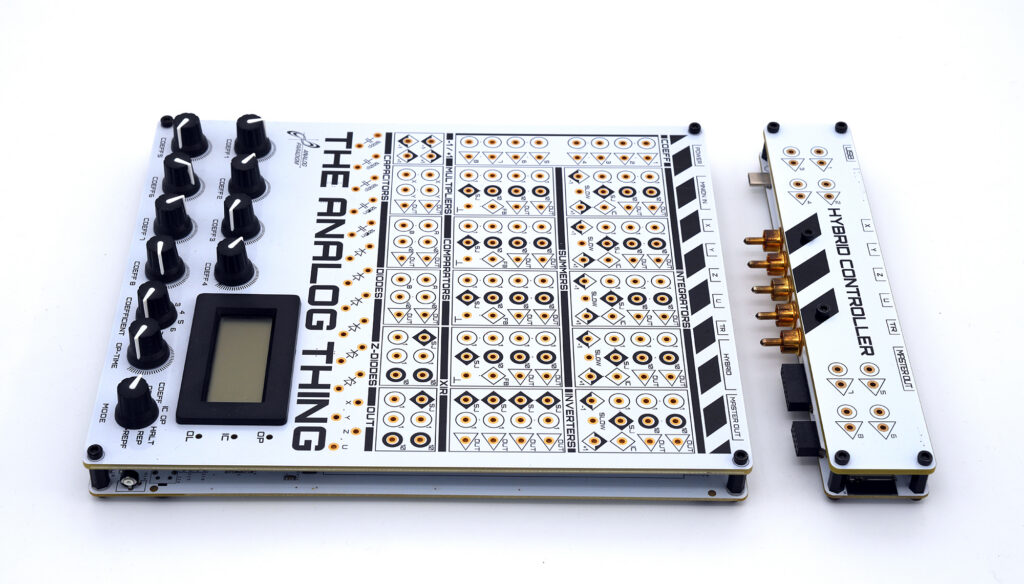
Moore’s Law is running out of road. As digital computing hits its physical limits, an older paradigm is being reconsidered: analog computing, which solves problems with continuous voltages instead of binary logic — faster, and radically more energy-efficient for the right class of problems. THE ANALOG THING (THAT) brought this way of computing back within reach of anyone curious enough to try it. What it lacked was a way to connect to the digital world it’s meant to complement.
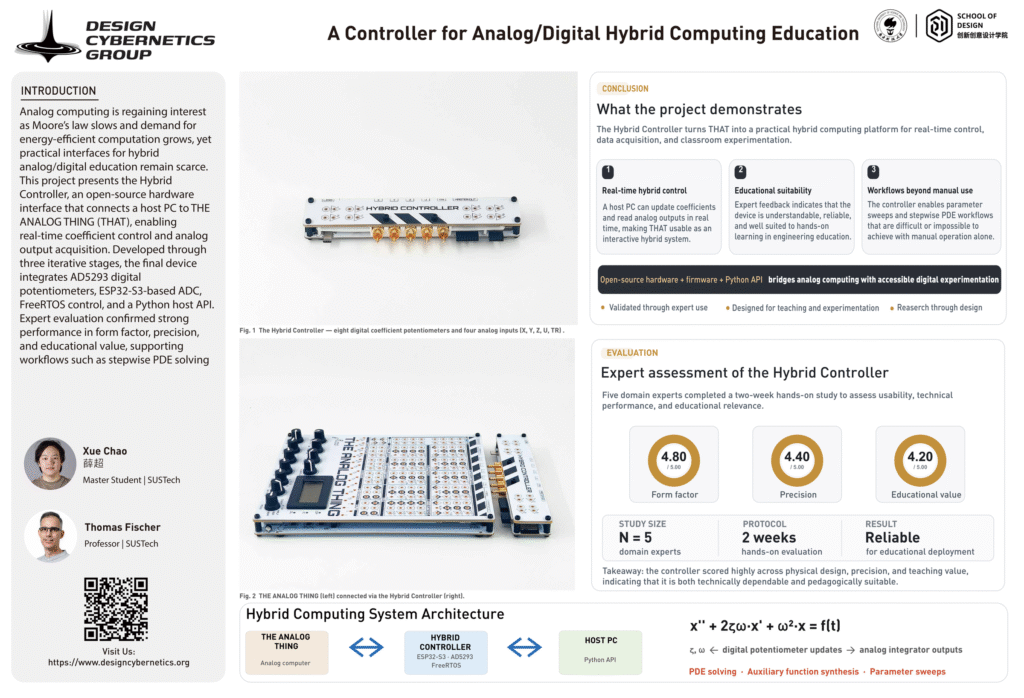
Hybrid Controller designed by master’s student Xue Chao under the supervision of Thomas Fischer closes that gap. It sits on top of THAT and gives it a USB-C connection to any computer — turning the standalone analog computer into a hybrid system, where analog and digital computing work side by side rather than in isolation. It’s a small piece of hardware pointed at a much larger question: What does computing look like when it’s no longer purely digital?
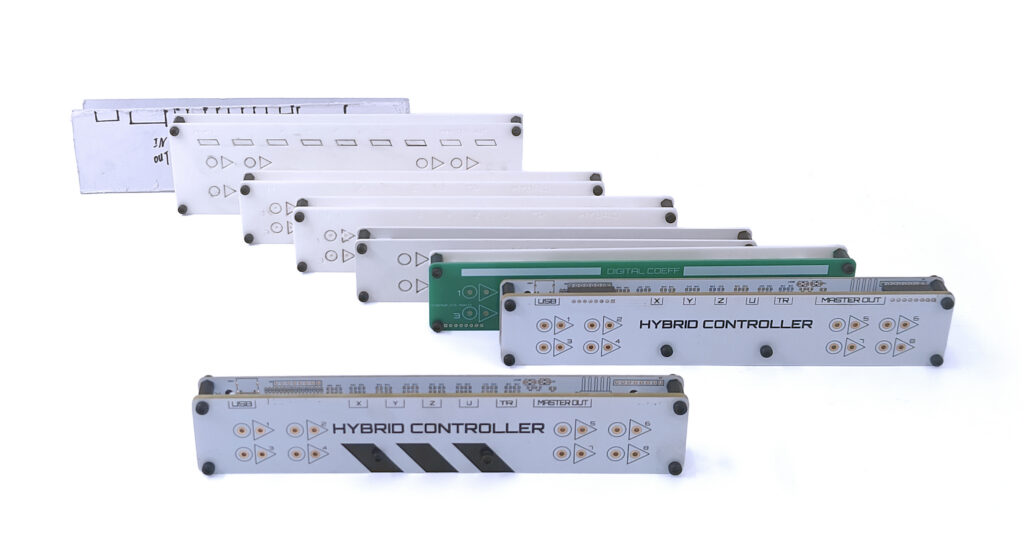
Every decision was shaped by the people this is for: hobbyists and enthusiasts keeping analog computing alive outside institutional walls, on their own terms. No soldering, no calibration — just plug it in. Three rounds of hardware iteration, from an Arduino breadboard to a production-ready PCB, went into making that possible, refined along the way with real hardware experts. An early breadboard prototype was used in collaboration with master’s student Bao Boyu to demonstrate analog-digital hybrid computing in the context of architectural parametric 3D modeling.
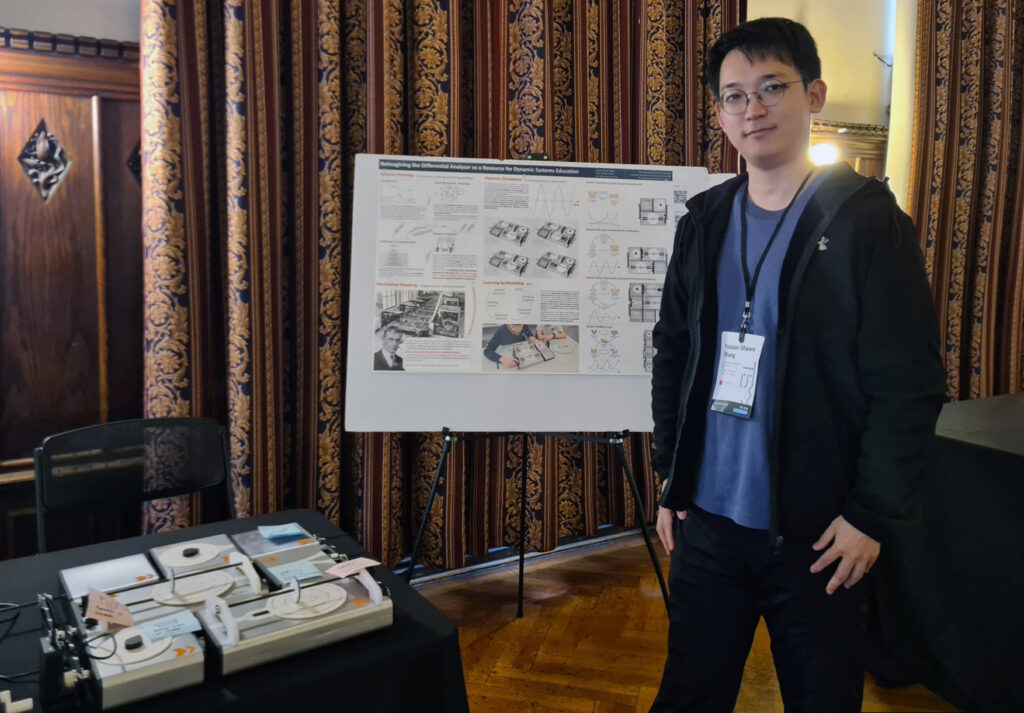
The final device shares THAT’s footprint and black-and-white design language exactly, so the two read as one system rather than an add-on. Gold-finished connectors, a clean two-board PCB sandwich, and a form factor sized to a single A4 sheet make it feel like something built to last — not a prototype. The conference poster below was presented at the The Analog Computing Days 2026 (ACD’26) in Germany.
Five specialists in hybrid computing and educational technology have kindly agreed to perform an expert evaluation and put the device through two weeks of hands-on use. The hardware and the underlying idea both held up — physical design and long-term potential were rated among the strongest they’d seen. Software is the next frontier, and that’s where the project is headed next.
Reference